


Stephanie Hepburn is a writer in New Orleans. She is the editor in chief of CrisisTalk. You can reach her at editor@crisisnow.com.
The Substance Abuse and Mental Health Services Administration, or SAMHSA, released updated national behavioral health crisis care guidelines on January 15. Three components make up the new release: national guidelines for a coordinated behavioral health crisis care system, model definitions and a draft mobile crisis implementation toolkit. The latter is open to public comment through March 21.
Three weeks ago, Dr. Billina Shaw, SAMHSA senior medical advisor, explained the updated guidance expands on the foundational 2020 guidelines and the model definitions help create shared nomenclature about crisis services. She told CrisisTalk’s 988 Jam that while the federal agency can’t mandate how states implement their services, the document is intended to “clarify what the services are, how they’re different from each other, [and] who provides the services.”
In anticipation of 988, the nationwide number for a behavioral health crisis, the former guidelines focused primarily on core behavioral health emergency response services that correspond to sister 911 services — state or regional call center hubs that can answer calls in real time, akin to public safety answering points, 24/7 mobile crisis services as the corresponding service to ambulance, and 23-hour crisis stabilization the parallel to the emergency room.
Paul Galdys, deputy CEO at Recovery Innovations and external partner to both iterations of the guidelines, says the old version had a narrower scope. In contrast, the latest guidelines encompass “a more comprehensive system of care.”
Published in February 2020, the former guidelines came out just as the Federal Communications Commission had begun the process to make 988 the nationwide number for mental health and suicide crisis. It would be more than two years before 988 became a reality, with communities throughout the U.S. redesigning and expanding their behavioral health crisis systems to ensure coordination and interconnection between services and intersecting systems. According to SAMHSA, the years since the guidelines came out and 988’s launch in 2022 have given insights into the breadth of emergency and crisis stabilization services that support people through “emergent and urgent behavioral health needs.” Also included are prevention and postvention services and supports to reduce the likelihood of someone experiencing a crisis.
Dr. Miriam E. Delphin-Rittmon, the former leader of SAMHSA, wrote in the foreword of the 2025 guidelines that the nation’s transition to 988 — “as well as recent progress and emerging needs in the field related to behavioral health crisis system transformation” — was the catalyst for the updated guidelines.
SAMHSA lists the core tenets and categories of crisis care as “someone to contact, someone to respond and a safe place for help.”
Originally, “someone to contact” was called “someone to talk to” and focused on state or regional crisis call centers open 24 hours, 7 days a week, that could perform real-time crisis coordination. Lawmakers and behavioral health leaders had long envisioned an easy-to-remember number people could call in a mental health, suicide or substance use crisis, putting it on par with 911. Texting was a natural addition. In November 2021, the Federal Communications Commission, concerned about the well-being of young people more likely to text than call, required telecom companies to activate texting to 988 by July 16, 2022.
Today, the 988 Suicide and Crisis Lifeline, funded by SAMHSA and run by the nonprofit Vibrant Emotional Health, comprises a network of 216 state and local contact centers. According to SAMHSA, since the launch of 988, the centers have answered more than 13 million calls, texts and chats. (Chat has been available on the Lifeline website since 2013.) While most people called 988 (68%), 18% of users texted and 14% used chat.
The updated guidelines include the 988 Lifeline contact centers and other hotlines, peer warmlines and helplines that provide specialized support, such as the Alzheimer’s Association’s 24/7 Helpline or Lines for Life’s YouthLine.
Since launching, behavioral health leaders have shared their hope that 988 contact centers become more accessible to third-party callers but, in many communities, that isn’t a reality, making it critical that other lines can provide quality-of-life support for people at risk of detention for violations related to substance use, mental health or extreme poverty. Among them are public service lines like 211 and 311. In Atlanta, 311 agents can submit an outreach request to the Atlanta-based Policing Alternatives and Diversion Initiative for people experiencing quality-of-life challenges. Connecticut United Way 211 answers 988 and quality-of-life calls and connects callers to youth mobile crisis intervention services.
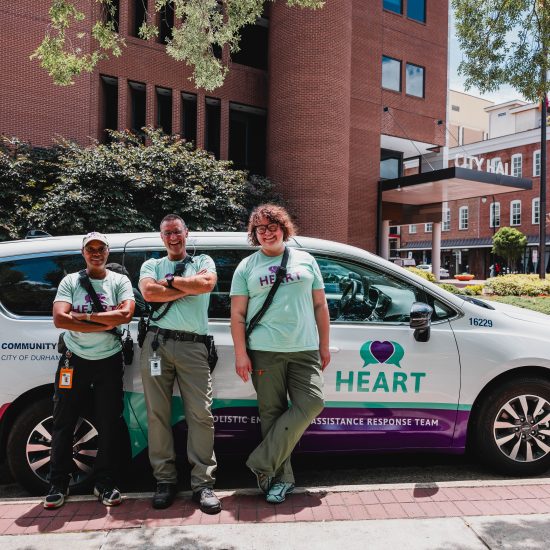
The updated guidelines’ “someone to respond” category includes community-based mobile crisis services for adults and youth but also community outreach teams that aren’t on-demand crisis service providers per se but do provide crisis prevention and postvention support. These teams often go into the community, engaging people and helping them connect to services, housing and employment.
The new guidelines also list co-responder teams, which often comprise a first responder and a clinician, as a mobile crisis team service model. This diverges from the original guidelines, which highlighted crisis response partnerships with emergency medical services and law enforcement but didn’t include co-responder teams as mobile crisis team providers.
Galdys says the updated language reflects existing community mobile responses, which often still include co-responder teams. A national survey on mobile crisis teams, open from Jan. 12 to March 31, 2022, found that 16% of respondents reported a police officer on their mobile crisis response teams. Preston Looper, one of the study’s lead researchers, told CrisisTalk far fewer EMS-clinician co-responder teams responded to the survey.
Earlier this month, Ted Lutterman, senior director of government and commercial research at the National Association of State Mental Health Program Directors Research Institute, told CrisisTalk mobile crisis services have expanded throughout the U.S., growing 19% between 2022 and 2023. A recent NRI report on behavioral health workforce shortages and initiatives shows that staffing them has been difficult, with services often facing challenges recruiting qualified professionals to work overnight, weekend and holiday shifts. They also have to compete with employers offering more pay and less stressful work environments. Some states have adapted by shifting their mobile crisis two-person teams to a peer and a bachelor’s level behavioral health worker, opening up the pool of potential employees. “Someone [with a graduate degree] is available on call but isn’t going out on visits because they just couldn’t hire enough MSWs for those shifts,” he said, adding that hiring qualified staff remains difficult even when there’s state funding.
Civilian-only behavioral health mobile crisis programs are often funded through a combination of federal block grants, state and local money and Medicaid reimbursement. Commercial insurers have mostly managed to avoid paying, putting much of the onus on local tax dollars to carry the financial burden. Without sufficient reimbursement from commercial payers, mobile crisis services face challenges staying afloat, let alone having around-the-clock availability, says Galdys. “Co-responder teams evolved because communities simply lacked adequate mobile crisis team response services; often the result of inadequate reimbursement to fund a community-based mobile response that met the need,” he said, adding that when a civilian-only response isn’t available, “law enforcement, trying to do their best to offer a compassionate response, has no choice but to respond.
“This effort to do better for those experiencing a crisis is a driving force behind the evolution of co-responders.”
Diverting people in a behavioral health crisis from a law enforcement response requires continued collaboration with law enforcement, says Galdys. “I believe when there’s trust in a true mobile crisis response, law enforcement won’t respond except when necessary,” he said, adding that in Georgia and Arizona, mobile crisis teams respond quickly to calls and their robust partnership with the community and law enforcement means they request police support roughly “two to three percent of the time.” “Communities are trying to do all they can to have a kinder, gentler and more supportive response.”
SAMHSA’s 2025 guidelines expand on what was formerly called “a place to go,” now “a safe place for help.” The former guidelines focused primarily on 23-hour crisis receiving and stabilization services, which remain a core service but are now called high-intensity behavioral health emergency centers. Like community-based mobile crisis services, these centers are also facing workforce shortages as they compete with hospitals for medical staff, including nurses and nurse practitioners. Without these staff members, Lutterman said diverting people from the emergency room is far less likely, particularly in states requiring medical clearance.
Those services SAMHSA designates as capable of addressing emergencies are hospital-based behavioral health emergency stabilization units and high-intensity behavioral health emergency centers — both accept voluntary and involuntary admissions. Hospital-based stabilization units receive admissions from the hospital emergency department, though some, like the McNabb Center at East Tennessee Children’s Hospital, also get referrals from other sources. High-intensity emergency centers accept walk-ins and drop-offs, including from law enforcement.
The updated guidelines include not only emergency services but also a range of on-demand services, such as behavioral health crisis centers providing the same range of services as emergency centers but only for people voluntarily seeking services, behavioral health urgent care, peer respite, sobering centers and crisis residential programs. Also included are community crisis respite apartments, where people can temporarily stay and receive case management, treatment and skill building. Threaded throughout is an emphasis on data, evaluation and quality improvement.
The shift to “a safe place for help” doesn’t solely mean going elsewhere but also creating a safe place at home with services like in-home crisis stabilization for youth. Andrea Rifkind, former program director and therapist at Sheppard Pratt Health System’s Care and Connection for Families, a Maryland program providing short-term crisis intervention and counseling services, told CrisisTalk this allows young people to remain among their natural supports, connections that might be a protective factor. She emphasized in-home stabilization can make it easier for the therapeutic team to build trust and rapport with the client. “In our experience, young people are comfortable in a less formal, traditional therapeutic space,” she said.
What stands out between the old and new iterations of the guidelines, says Galdys, is the latest ones go beyond the 988 crisis system trifecta — state or regional call center hubs, mobile crisis services and 23-hour crisis stabilization — and into a comprehensive, interconnected and coordinated system of care within behavioral health and between itself and intersecting systems and partners such as 911, public service lines and community-based supports. “The document leans into ensuring communities have all the different services necessary to meet people’s needs in the least restrictive way that makes sense for that person,” he said. “It’s a system-based approach that requires ongoing collaboration.”
Galdys hopes work on crisis service model definitions continues so all elements needed to realize parity reimbursement from Medicaid, Medicare and commercial insurers are advanced, creating a path for behavioral health crisis systems of care to be sustained like other forms of healthcare. “That means reimbursement by all healthcare payers,” he said, adding that providers can bill for services when someone is transported by ambulance or goes to the emergency room for a physical issue. “These services need standardized healthcare codes and tightly defined requirements for service delivery to eliminate the challenges currently facing providers seeking reimbursement.”
In the latest guidelines, SAMHSA highlights people in crisis “require ‘no wrong door’ entry into the crisis system” with rapid connectivity to the service they need “at the right time, in the right location.” Making that a reality means facilities must take an Emergency Medical Treatment and Labor Act (EMTALA) approach, accepting all those who come in, says Galdys. “Yet, there’s no facility-based reimbursement structure largely recognized by commercial payers and Medicare.” He says to make SAMHSA’s guidelines a reality in communities nationwide, “We need to eliminate the burden on local taxpayers by having healthcare insurers reimburse for these critical healthcare services.”