


Stephanie Hepburn is a writer in New Orleans. She is the editor in chief of CrisisTalk. You can reach her at editor@crisisnow.com.
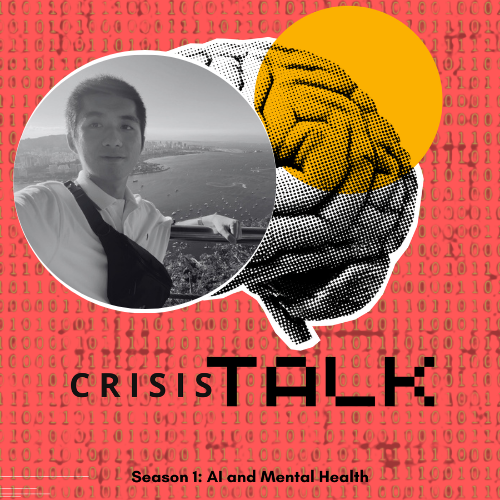
How is AI affecting the well-being of people working in tech? A conversation with data scientist Brandon Liverence on spikes in layoffs in the tech world and the escalating existential fears he and his peers have about whether they’ll be replaced by AI and what comes next.
Transcript
Brandon Liverence: You’ve really got AI suddenly getting so good that it can now plausibly do a lot of knowledge work. You know, it’s sort of like initially AI came for the software engineers, now it’s coming for the data scientists and the designers, the UX researchers, the product managers. And so there’s a bit of this existential fear that a lot of people have, where it’s like suddenly, you know, it almost feels like, yeah, maybe this thing can do my job, or most of my job. So what is what is my job? What is my career?
Stephanie Hepburn: This is Crisis Talk. I’m your host, Stephanie Hepburn. This is part two of Canary in the Coal Mine how the impact of AI on tech workers offers insight into how AI may affect the labor market as a whole and the people who comprise it. Today I’m speaking with data scientist Brandon Liverence. He talks about the spike in layoffs in the tech world and the escalating existential fears he and his peers have about whether they’ll be replaced by AI and what comes next. Let’s jump in.
Brandon Liverence: And prior to that, I had an academic career, I got a PhD, and yeah, I’m based in uh in the Bay Area and yeah, happy to be here.
Stephanie Hepburn: So, one of the questions that I have is how has the rapid change with AI impacted your day-to-day job? So, just to give a little bit of a background in terms of why I’m looking into this, I spoke to a researcher named Elias Aboujaoude, who was sharing that people that he’s seeing, he’s a clinician, he’s a psychiatrist in Silicon Valley in the Bay Area, were coming in with new symptoms. So people who normally weren’t experiencing anxiety, normally were not experiencing depression. This was kind of their tipping point where they were experiencing tensions within their job because of AI, you know, changes in pace and demand and productivity, or they were fearful that they were going to become obsolete. So I wanted to see how you’re feeling individually. And then if we could talk about amongst your colleagues and amongst your friends and your peers in the same space, what you’re experiencing.
Brandon Liverence: I think there are a lot of things happening all at the same time because of AI. One is that it’s putting pressure on a lot of traditionally successful businesses in tech. So companies that build apps for consumers, technology that does some useful job for the end user, but where maybe suddenly AI chatbots can kind of do that task now or some approximation of that task. So what that’s doing is putting pressure on a lot of existing companies. So you have a lot of layoffs. But on top of that, um, you’ve really got AI suddenly getting so good that it can now plausibly do a lot of knowledge work. And, you know, it’s sort of like initially AI came for the software engineers, now it’s coming for the data scientists and the designers, the UX researchers, the product managers. And so there’s a bit of this sort of existential fear that a lot of people have, where it’s like suddenly, you know, it almost feels like, yeah, maybe this thing can do my job or most of my job. So then what is what is my job? What is my career? And, you know, there’s sort of a lot of guidance of like, we need to adapt, we need to get more productive, or or or shift the way that we work. But there really is this sort of, I don’t know, this strange realization, and it’s a bit sad, uh, that, hey, I guess a machine can actually do a lot of what I, what I thought was my sort of special contribution. So yeah, I would say a lot of that, that sort of mix of feelings is very prevalent amongst my colleagues and my friends in tech.
Stephanie Hepburn: So one of the things that Dr. Aboujaoude mentioned was what happens next? It’s not just like, oh, well, now I’m gonna go back into the job market and look for another job, doing the same position. Right. I think there’s also, like you said, sort of this existential fear of, okay, now do I need to retrain in something? Do I need to pivot? Do I need to start baking bread? Like what is like what is this pivot gonna look like? Because it’s not just, oh, maybe I just do the same job elsewhere.
Brandon Liverence: Yeah, that is also a very real concern a lot of people have. It’s sort of like, well, can I get another job doing something similar to what I do now or what I’ve done in the past, you know, and especially among people who have been directly impacted by the layoffs. And we’re kind of in this era of seemingly permanent layoffs. You know, even like large, extremely profitable companies are just constantly laying people off. Um, so if you’re impacted by layoff and you just want, you just want your job back. You want to do the same kind of work you were doing before, but now at a different company, it’s a more competitive job market. And I think a lot of companies are questioning how many headcount they need because of AI. But also, yeah, I think a lot of people are asking these deeper questions of like, well, what do I even want my career to look like going forward? And I think with this pressure to rely on AI tools to do some of our work and in theory be more productive, it does also take away some of the problem solving and the joy that comes along with solving harder problems. And some of the, you know, I think some of the pleasures of my job are actually like getting really deep into a problem, writing code, you know, that sort of process of gradually like figuring something out. And so if now you can rely on an AI system to do a lot of that for you, and your job becomes maybe like monitoring five or six of those systems that are going off and doing the work, and then sort of checking the outputs and making sure that that everything is okay. It’s a very different kind of work then. You know, you’re managing a swarm of agents as opposed to getting deep in the weeds of the actual work. It’s uh it’s a strange moment for sure. And up until very recently, I was uh I was managing a very large uh data science team in my and my current employer. And we had a wave of layoffs, and so now I’ve moved back into an IC role.
Stephanie Hepburn: What’s an IC role?
Brandon Liverence: Oh, uh sorry, individual contributor. Someone who their job is to be a software engineer or a data scientist or a designer, whereas like previously I was actually managing a large team of other data scientists. And part of the thinking was that with AI, each data scientist can be more autonomous and we don’t need a centralized team or a centralized manager. Then that’s dramatically changed the nature of my role.
Stephanie Hepburn: So what happened to your colleagues? Is everybody now an IC or what happened there?
Brandon Liverence: Yep. So we went from a team of about 17 data scientists total to seven. So 10 were laid off. And then all the the remaining seven of us are kind of each working on different projects within the company.
Stephanie Hepburn: I’ve heard from people working in the space there’s just this disparity between how quickly the AI can do certain tasks and then how quickly humans can review them. Are you experiencing that as well? Or are you people that you work with or your friends in the space experiencing that too?
Brandon Liverence: I think there’s a generalized pressure to sort of do more with less because of AI. You should be able to use AI to become a like a 10x engineer or a or a hundred X engineer. So someone who is as productive as 10 other or 100 other employees in your same role. So in theory, AI should make all of us be able to be a lot more productive with the same unit of time. But yeah, I think it then creates this feeling like we should all be producing more output. And I think also puts pressure on the leadership of companies, especially startups, to be able to kind of produce a lot with relatively few actual humans doing the work.
Stephanie Hepburn: So from a compartmentalization perspective, has this seeped more into your downtime because there’s this expectation of high productivity?
Brandon Liverence: Yeah, I would say it’s more like I use my downtime these days to try to stay up to date on AI and how other people in my field are using it. So it’s not just do my job, but it’s also do my job, and then also make sure I carve out time to effectively reskill for this new era. And that’s always been true in tech. Like the things are always changing. So to be really good at your job, you do need to kind of be constantly in like a you know, a mode where you’re you’re able to learn new things, you know, new technologies, et cetera. Um, but I think AI has really accelerated that. Um, and it’s been such an inflection point where like suddenly everything is very different and then things are just changing by the month.
Stephanie Hepburn: So my question is, you know, my podcast focuses on mental health, and my first season focuses on mental health and AI. What would you recommend to these companies in order to make this experience sustainable for their employees?
Brandon Liverence: Yeah. And I think, for example, my company, just as part of our basically like benefits package, we have access to a certain number of sessions of mental health counseling, career coaching. And it’s great. It’d be great to have even more of that, but it’s certainly something that I think probably not every company does. But I think, you know, really having these discussions a bit more in the open, I think is a what uh happens a lot, is that people are sort of talking in small groups or one-on-one about how concerned they feel. But maybe not raising a lot of those concerns, you know, like it might feel less comfortable bringing up some of my some of these existential fears that I talked about earlier, you know, in an all-hands meeting with my entire company. Um, but maybe that is the right forum, uh, you know, in to to kind of acknowledge that everyone is feeling the same things. And, you know, I think certainly companies should be investing and not just putting the onus on employees, but actually investing resources in helping their employees actually learn these new skills and and and stay up to date in the AI era.
Stephanie Hepburn: From a mental health perspective, what are you seeing amongst your colleagues and your peers in the tech space? And that includes people who have already lost their jobs or who are worried that they will, or like you said, are just not enjoying what they’re doing now because it has shifted so much because of AI.
Brandon Liverence: I think a lot of anxiety, certainly a lot of just sadness. You know, I mean at my company after these layoffs were announced, it was just a very, very sad moment, you know, saying goodbye to to close friends that you were working with every day. But, you know, even in a couple of months out from that, still this general sense of kind of sadness and anxiety that I think everyone’s experiencing day to day. And yeah, I think you have a lot of people questioning whether this is a field they want to stay in. And but then that obviously creates a new kind of pressure if you have to like reinvent yourself. Interestingly, one of my former bosses, who is a kind of very senior, like a director uh of data science, he left the field and then became a psychologist. So he’d been kind of for several years doing his clinical training. But he’s like, you know, this is actually the perfect moment to switch from tech into mental health.
Stephanie Hepburn: So well, and his client base might be increasing. So yes.
Brandon Liverence: I was like, that’s that’s probably that’s probably a growth area right now and something that AI definitely still can’t do very well. You know, I’m I’m single, I don’t have a family, so I could take time off from my job and try to reinvent myself or something, but a lot of people don’t have that luxury. If you’re supporting a family, if you have you know a mortgage, what have you, like a lot of people need to be employed. So you might not have the time to like step back from your work and see if it’s you know feasible to, I don’t know, go make wine or cheese or something.
Stephanie Hepburn: I think work life is so critical to somebody’s well-being. And it’s something that we don’t often talk enough about, but we know that the threat of losing one’s job creates such economic pressure, but also, like you said, these other mental health aspects of what do I do now? Not only how am I going to pay my mortgage, how am I gonna pay my rent, but also am I going to be able to make enough money to sustain myself in the future? I love the example that you gave of your former boss. If you have some other examples of maybe pivots that people are taking, but also just like what they’re experiencing.
Brandon Liverence: I do think it’s more of this like people who are extraordinarily well educated, extraordinarily brilliant and talented suddenly waking up in the morning and asking themselves, like, what am I doing with my life? You know, and what is uniquely human about us in the work that we do. Up until about six or eight months ago, like it, you know, we spent a lot of time playing with these AI models and seeing if it could do a lot of our work and and and felt like, no, it’s actually not great. It’s it’s hallucinating too much, it’s giving bad outputs. But then suddenly, you know, there was a bit of an inflection point where the models just got really, really good. And then you had tools like Claude Code and Claude Cowork that made it really, really easy to automate huge parts of our workflows. And then that really became an inflection point where suddenly you had people who weren’t even data scientists sort of generating data science-like outputs. And I was like, uh, this is this isn’t good. You know. So it’s it’s really a bit of that of like, I don’t even know what next year is going to bring. But we still see that people that overrely on it end up generating results that are that are totally plausible to the untrained eye, right? To, you know, you could generate a whole set of slides based on some data analysis, but there are pieces in the middle that are wrong. Uh, and it actually creates a lot of work for a human data scientist to figure that out. But then the real risk is that these types of things are just sort of floating around where people are going and doing this work with AI, and then no one actually knows that it’s wrong.
Stephanie Hepburn: Right. They’re just relying on it as fast as well.
Brandon Liverence: Yeah. And then recently Anthropic released a set of tools that work with Claude, and they’re called skills. If it’s like a library of these skills, each skill is targeted to a specific kind of tech worker. So there’s like a UX skill, there’s like a designer skill, there’s a data scientist skill, there’s a software engineer skill. So in Claude, you can basically just reference this skill and then give it your prompt. And the idea is that it will like basically try to simulate being that kind of worker. It’s a very weird thing to go and actually look at what these skills are. They’re basically just documents, they’re just text that kind of explain like the sequence of things that you should do if you are, say, a data scientist when you’re when you’re tackling a certain type of problem and wondering like, is my entire contribution just can it really all be boiled down to like a thousand words of text in a markdown file in some GitHub repo somewhere? So it’s really that kind of thing that I think we all struggle with and grapple with.
Stephanie Hepburn: You know, it’s interesting. There’s a company now where AI agents can hire real humans. Have you heard about that?
Brandon Liverence: I have not, but it nothing would surprise me anymore.
Stephanie Hepburn: And it’s called RentAHuman. And the description is building the bridge between AI agents and the physical world. AI is incredibly powerful, but can’t exist in real life. This marketplace connects agents with humans who can be their hands, eyes, and feet. And then it says the vision. I’m laughing only because it is so wild. As AI gets more capable, it needs more help in the meat space. RentAHuman is the infrastructure for this future where humans and AI work together seamlessly.
Brandon Liverence: So the meat space as in like M-E-A-T.
Stephanie Hepburn: Yeah.
Brandon Liverence: It’s our meat. Yeah.
Stephanie Hepburn: That’s us. We’re the meat.
Brandon Liverence: Yeah. Well, there was a New York Times article about this uh a few weeks ago about how a lot of very influential people in tech, they use this term meat to describe humans. You know, that that to me, I feel like is like it’s like the worst of the worst, right? It’s like you’re not even trying to sugarcoat the disdain that you have for humans and the dystopian possibilities of this technology to take many, many jobs away. I used to worry that as a data science manager, maybe my job will eventually become managing teams of AIs instead of teams of people. And that sounds a lot less fun to me. But maybe what I really need to be afraid of is that my boss will be an AI and then I’ll just be one, you know, one of these like old model, you know, meat, meat-based data scientists. And, you know. Yeah.
Stephanie Hepburn: Yeah. And that feels, you know, I love dystopian fiction. I think every journalist has a drawer manuscript, and mine happens to be, I would say more speculative fiction, but it’s a little dystopian. The weirdest part is that I started writing this in college, and now I’m seeing parts of that.
Brandon Liverence: Right.
Stephanie Hepburn: I’m like, oh, I this isn’t even dystopian anymore.
Brandon Liverence: Right, right, right. It’s just reality.
Stephanie Hepburn: And that’s hard to wrap our minds around. When I was talking to Dr. Aboujaoude, he reminded me, Stephanie, this is not the first time that we’ve had these massive leaps. You have to think back to the development of the computer or the computer as we know the computer, the development of the internet, social media, the iPhone. But I think there are distinctions, even with those that seemed so unreal at the moment. This feels like another level.
Brandon Liverence: Yeah. Well, there it took a while with all those technologies, right? It wasn’t like computers arrived one day and then suddenly everyone had to start using a computer. And computers gradually got better and better, and then people gradually adapted, and then there was software that helped people do their jobs differently with computers. When Chat GPT was released, it felt like a true inflection moment in technology because it was so eerie. We were finally like I was I majored in cognitive science in in undergrad and we learned all about the Turing test.
Stephanie Hepburn: That’s funny, me too.
Brandon Liverence: Oh, nice. Yeah. Um, yeah. And the Turing test was sort of like, you know, no machine had ever come close to passing it. And then suddenly we had ChatGPT, and it was like, oh my God. Okay, that like the textbooks are already out of date now, right? And our our understanding of what intelligence really is is like fundamentally out of date. The pace of innovation is is it feels much more rapid, I feel like, than some of these previous cycles. Um, and yeah, if you listen to the a lot of mainstream economists are constantly making these points about all it’s just like, you know, every previous technical revolution has followed a similar course. Why should this one be any different? But on the ground, it it looks and feels different.
Stephanie Hepburn: Well, Brandon, thank you so much for joining me. I appreciate it.
Brandon Liverence: Absolutely. Well, thank you, Stephanie.
Stephanie Hepburn: That was data scientist Brandon Liverence on the accelerated changes AI is making to the tech industry and the impact on job security and career trajectory of those working in the space. If you are just tuning in, please take a listen to part one to hear Ella, an AI researcher, talk about her perspective on the paradox of AI efficiency. If you enjoyed this episode, please subscribe and leave us a review wherever you listen to the podcast. It helps others find the show. Thanks for listening. I’m your host and producer, our associate producer is Rin Koenig. Audio Engineering by Chris Mann. Music is Vinyl Couch by Blue Dot Sessions.
References
Is AI Triggering Anxiety and OCD? — Ep 11
Canary in the Coal Mine: What is the Impact of AI on Tech Workers? Part 1 – Ep 14
Where to listen and subscribe
Apple | Spotify | Amazon | iHeart | YouTube
We want to hear from you
Have you turned to an AI chatbot to discuss an interpersonal or mental health issue? Work at an AI company? Are you a researcher studying AI and mental health? We want to hear from you. Reach us at editor@crisisnow.com
What to listen to next
- Canary in the Coal Mine: What is the Impact of AI on Tech Workers? Part 1 – Ep 14
- What’s Happening With All Your Therapy App Messages? — Ep 13
- Can an AI Chatbot Connect Student Survivors of Sexual Violence to Resources? — Ep 12
- Is AI Triggering Anxiety and OCD? — Ep 11
- You, Me and Your AI Chatbot — How Therapists Are Navigating Chatbot Use — Ep 10
Credits
CrisisTalk is hosted and produced by Stephanie Hepburn. Our associate producer is Rin Koenig. Audio engineering by Chris Mann. Music is Vinyl Couch by Blue Dot Sessions.